Dónde comprar
¿Necesita asesoramiento? Nuestros altamente capacitados distribuidores estarán encantados de ayudarle con cualquier pregunta, ya sea pequeña o grande.
Encuentre su distribuidor más cercano
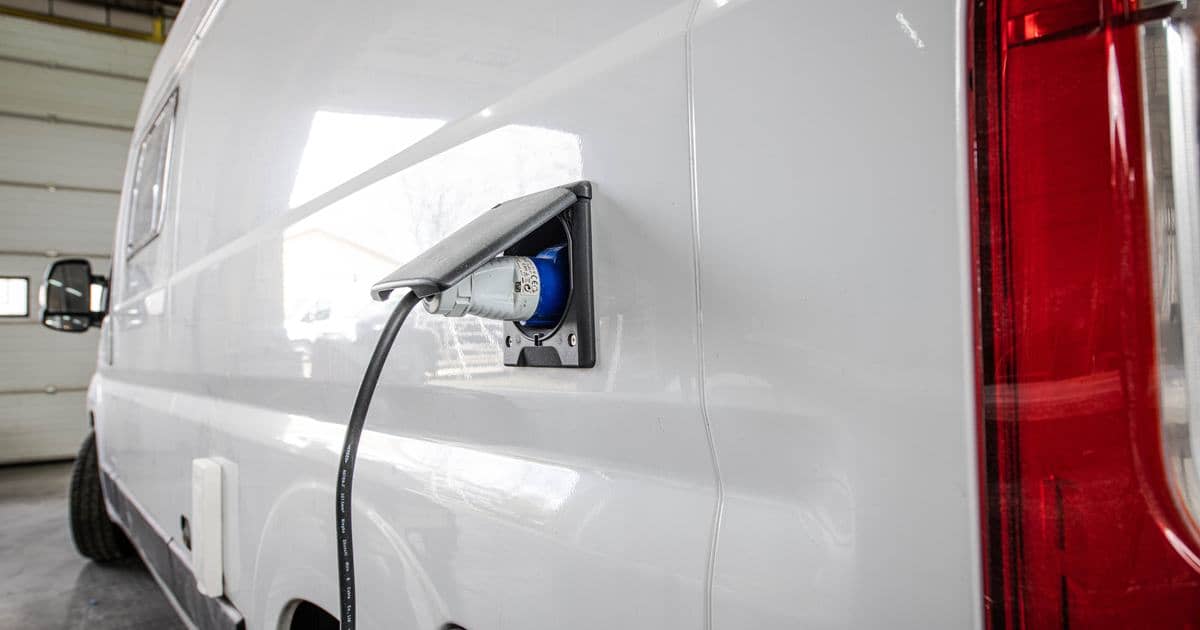
RV Shore Power: A beginner's guide
Everything you need to know to plug in safely and confidently
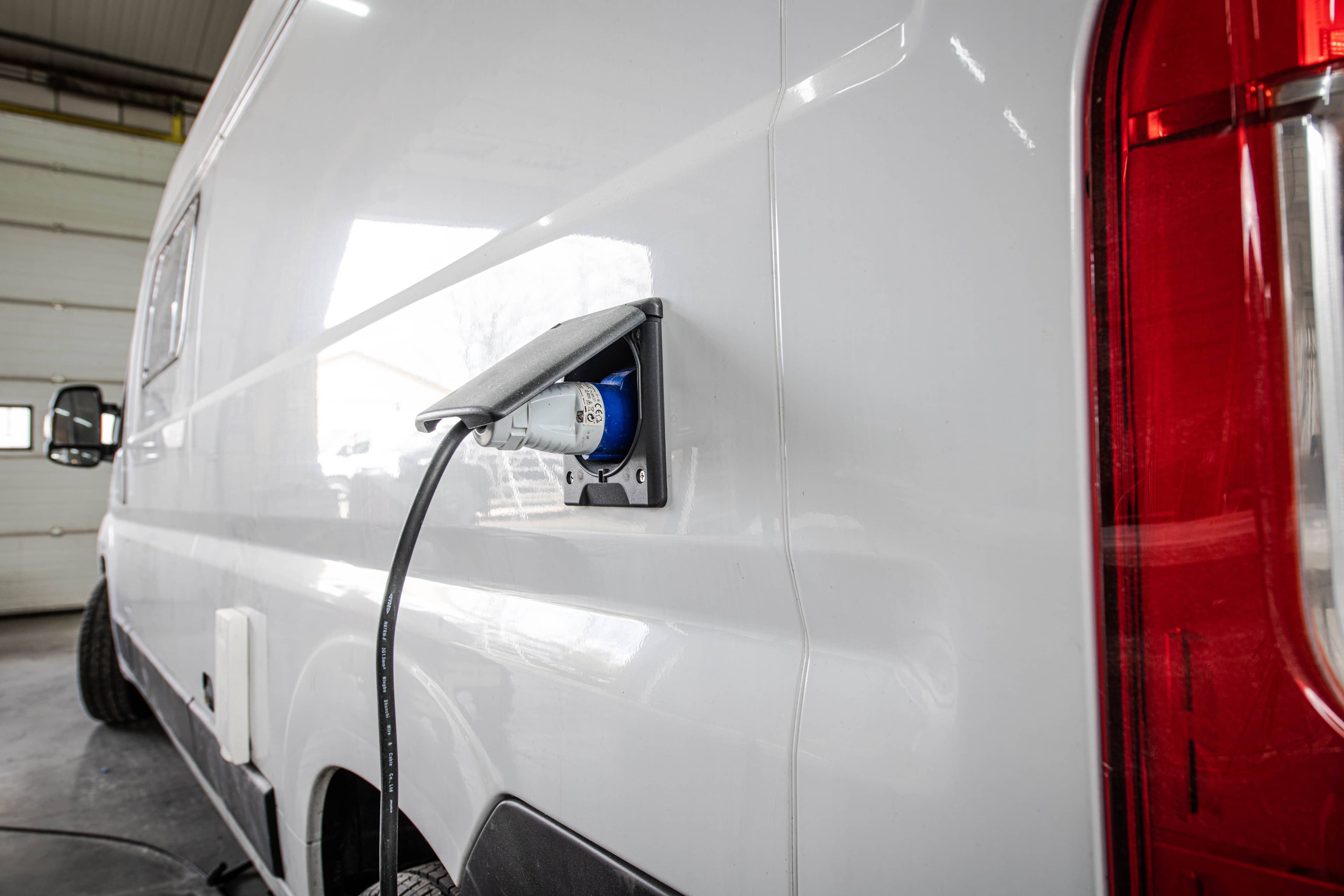
After months on the road, there's something satisfying about walking back into a house that just works: coffee machine, toaster, AC, TV, all at the flip of a switch. It's easy to take that kind of comfort for granted, until you're trying to recreate it in an RV running on batteries.
The limiting factor for a larger electrical system that can handle these comforts is usually budget and space. A big enough battery bank and solar array to run high-wattage appliances off-grid can get expensive and heavy fast, and not every RV has the room for it. This is where a shore power connection can be useful.
Designing an electrical system that isn't fully off-grid doesn't have to be restrictive. Knowing you can plug in when you need or want to can actually be freeing: it means you can build a smaller, lighter, more affordable system and still go further, because home comforts are never too far out of reach.
But adding shore power isn't just "plug in and go." Your electrical system needs to be designed to handle it safely and efficiently.
In this article, we'll look at when it makes sense to include shore power in your system, and how to approach it.

A shore power connection supports higher-power loads in two ways:
So, shore power can be useful when the vehicle is stationary for longer periods, such as at a campsite. It lets you size your electrical system for your normal off-grid needs and only run high-wattage appliances when plugged in, reducing the size and cost of your system. Alternatively, for systems sized for full-time off-grid living, a shore power connection can still be useful as a backup charging source.
However, many people living on the road don't need high-wattage appliances and prefer staying off-grid for most of the time. In this case, a properly sized off-grid system is all they need. But if you want to have the flexibility of charging your batteries and running high-wattage appliances whenever shore power is available, then keep reading.

The first step is determining whether you need just a battery charger, or an inverter/charger combined unit.
If you will not be using any AC loads in your campervan, such as a TV or even just a laptop charger, then a charger-only unit is the simplest option. It allows you to recharge your batteries from shore power without adding unnecessary complexity.
But if you do want to use AC appliances, then a combined inverter/charger, such as our MultiPlus or Quattro ranges, is the more suitable solution. They combine three key functions in one device:
To learn more about Victron Energy inverter/chargers, and which size and model you would need for your setup, have a look at our inverter/charger help me choose guide.
In addition to the charger or inverter/charger, you will also need:

The starting point of any incoming AC electricity is the consumer unit (also known as a distribution board or breaker box). This is where incoming shore power is protected and distributed to your AC circuits.
Within the consumer unit, there are:
So, a consumer unit protects you against electric shocks and fires, but only if the system is properly grounded too.
Grounding means giving electricity a safe path to flow into if something goes wrong (instead of through you!). In a house, that path leads into the ground. In a van, there is no ground to connect to, since the van sits on rubber tyres, which don't conduct electricity. Instead, vans rely on local bonding: the inverter/charger's DC negative and the AC Neutral output are both connected to the central negative busbar, which is connected to the vehicle's chassis, creating a closed loop.
If a fault occurs, current flows through the chassis and back into the inverter/charger via this loop instead of taking its normal path back through Neutral. (AC power normally travels to your appliances on one wire, called Live, and back on another, called Neutral, completing the circuit.) The RCD constantly compares the current going out on Live with the current coming back on Neutral, so the moment it detects a mismatch, it interprets this as current going somewhere it shouldn't (potentially through a person) and cuts the power in a fraction of a second.
How many consumer units do you need?
In short, every safe shore power system starts with a consumer unit to protect your circuits, and a properly grounded system so that protection actually works. From there, whether you need one consumer unit or two simply comes down to whether you're running a charger alone or a combined inverter/charger setup.
When upgrading your RV to connect to shore power, it helps to understand the different amperages you’ll come across at campsites and RV parks.
In most cases, you’ll see the following:
Europe
Typically, a 16 A outlet at 230 V AC, which equals 3.68 kW.
In practice, many campsites offer between 6 A and 16 A, giving you roughly 1.38 kW to 3.68 kW.
United States
Shore power usually ranges from 20 A to 50 A at 120 V AC, which equals around 2.4 kW to 6 kW.
Shore power is always protected by a circuit breaker. This safety device cuts the power if the load becomes too high.
Because of this, it’s important to limit how much current your inverter draws from the mains supply, based on what’s available at the campsite. An inverter/charger with current limiting makes this straightforward. Without it, the campsite breaker will trip whenever your power demand exceeds the available supply.
Setting a current limit on its own would normally mean your available power is simply capped. Victron inverter/chargers above 500VA have a feature called PowerAssist that comes in handy here: if your load exceeds the set shore power limit, the inverter/charger automatically supplements it with extra power from your batteries, rather than tripping the breaker or cutting you off. Once demand drops again, it goes back to drawing only from shore power, and resumes charging your batteries.
If you ship your RV between regions such as Europe and the United States, you’ll need to consider differences in shore power systems.
The main differences are:
Victron inverter/chargers, such as the MultiPlus and Quattro, are built for a specific regional voltage and frequency (this is why separate 120V and 230V versions of the same model exist), so a unit designed for one region won't correctly accept shore power from the other without additional equipment. To manage this, you can:
If you plan to travel between regions regularly, it's worth considering this during the initial system design, rather than adapting later.
In most campervan systems, standard protection discussed above, such as proper grounding, an RCD, and correctly sized circuit breakers, cables and fuses, is sufficient.
In some cases, however, an isolation transformer is added between the shore power inlet and the onboard system. This creates a fully isolated AC supply, separating your RV from the campsite’s electrical network.
This can be useful when:
That said, this is not a standard requirement for every RV as it adds cost, weight, and complexity, and is typically only considered in more advanced or specialised builds.
Adding shore power is a practical way to make your RV system more flexible, especially as your energy needs grow. With the right setup, you can stay off-grid when you want, and plug in when it makes sense.
If you'd like to explore your options further or learn more about designing your system, these resources are a good place to start:
Happy travels!

Beril Berkem • 04 May 2026
How to size a solar system for your RV
Learn how to size a solar system for your RV. Estimate your energy needs and choose the right components to power your adventures.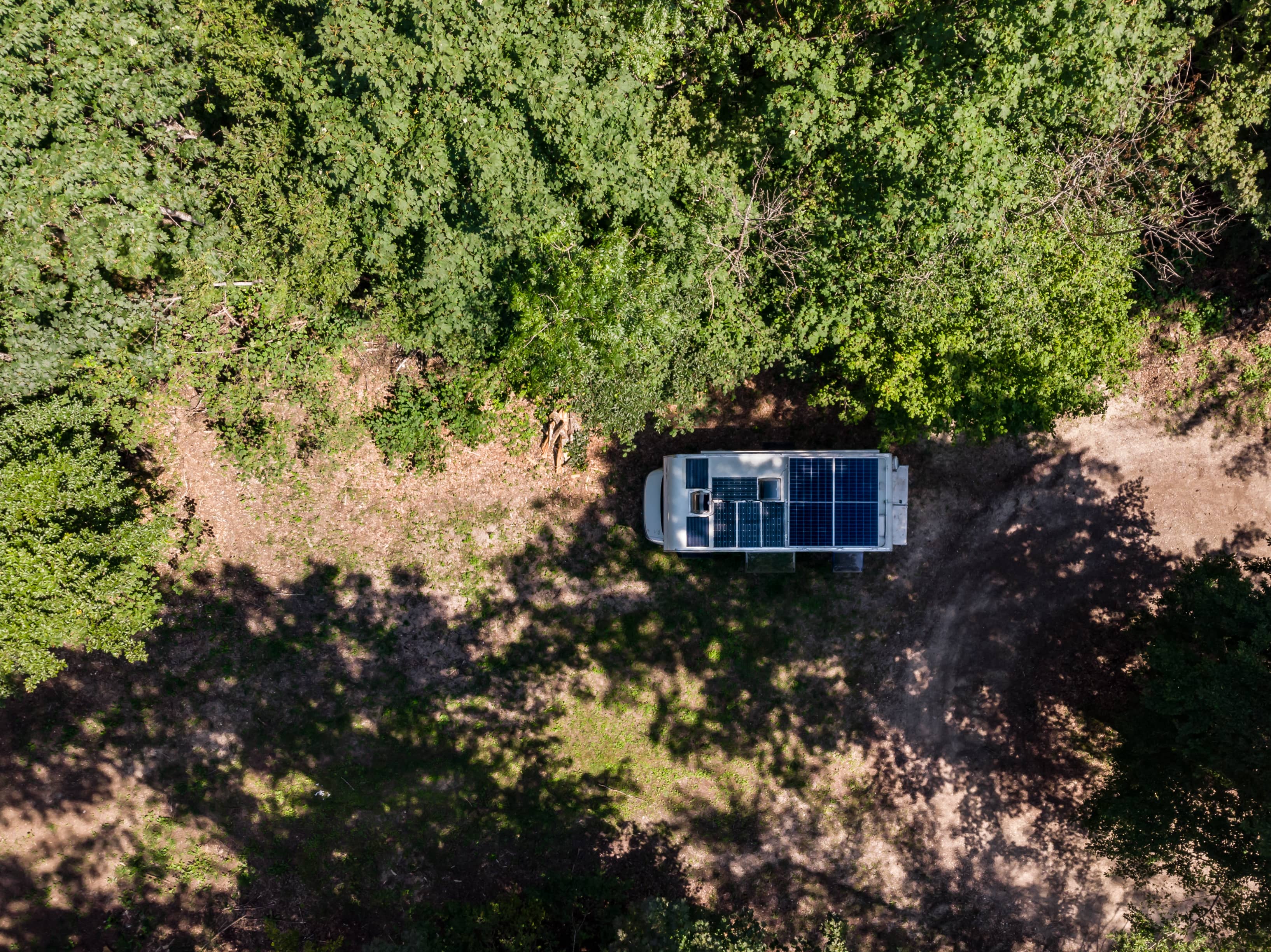
Beril Berkem • 16 June 2026
How much does an RV solar system cost?
Get a feeling for the cost of an RV solar system and its components through some helpful examples and tips.
Beril Berkem, Douglas Edmond Steinman • 29 July 2026
Thinking of switching your RV battery from lead-acid to lithium?
Everything you need to know before switching your RV's battery bank to lithium.¿Necesita asesoramiento? Nuestros altamente capacitados distribuidores estarán encantados de ayudarle con cualquier pregunta, ya sea pequeña o grande.
Encuentre su distribuidor más cercano
Consulte nuestros recursos de soporte o contacte con su distribuidor original para obtener soporte específico, reparaciones o solicitudes de garantía.
Asistencia
Lea más sobre nuestra garantía estándar de 5 años, líder en el sector, y nuestro servicio de reparación global.
Garantía

©Victron Energy 2026