Dónde comprar
¿Necesita asesoramiento? Nuestros altamente capacitados distribuidores estarán encantados de ayudarle con cualquier pregunta, ya sea pequeña o grande.
Encuentre su distribuidor más cercano

Iman Verte
The green school at the edge of the desert.

The school’s management decided to invest in a multi-faceted educational sustainability initiative which would help its pupils to learn about solar energy, water sustainability and waste management. The most ambitious part of the programme was for the entire school to become self-sufficient in solar energy.
Because the city’s electricity grid is unreliable they had for many years relied on a 65 kVA generator to run their air conditioning units, lighting and educational aids during blackouts.
Several obstacles to energy independence lay ahead!
An initial site survey by the school’s chosen solar installation partner, SEEMA SOLAR, found that the AC electricity distribution already in place – wiring, switches and sockets – was in a dangerous condition such that it was exposing students and staff to risk.
Seema Solar’s three month installation project began with re-wiring switches and outlets in order that their new power supply would be safe for use.
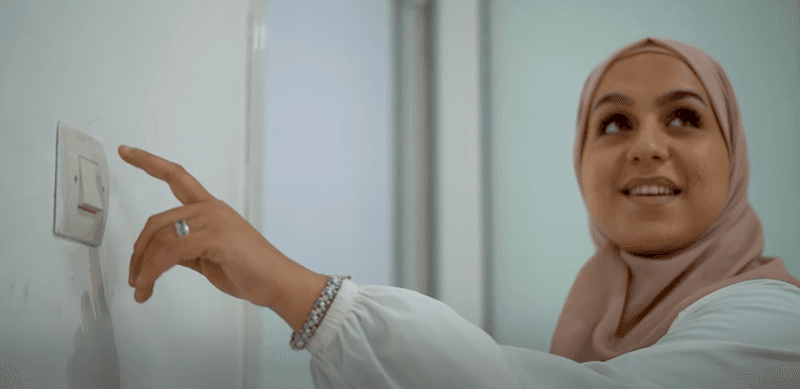
As part of that renewal, the old air conditioning units and fridges were replaced with more energy-efficient models in order to optimise the school’s overall power consumption. As a result, since December 2025, the school has been self-sufficient in electricity. The new installation is grid-tied so that the electricity grid can provide back-up power if required.
The introduction of reliable power has brought forward an evolution in the school’s teaching practices: in the past, lessons were mainly conducted using chalk and blackboard – whereas today, it uses video projectors. There’s been a transition to digital learning too – a major advancement which has improved the quality of education and brought the school up-to-date with today’s educational needs.
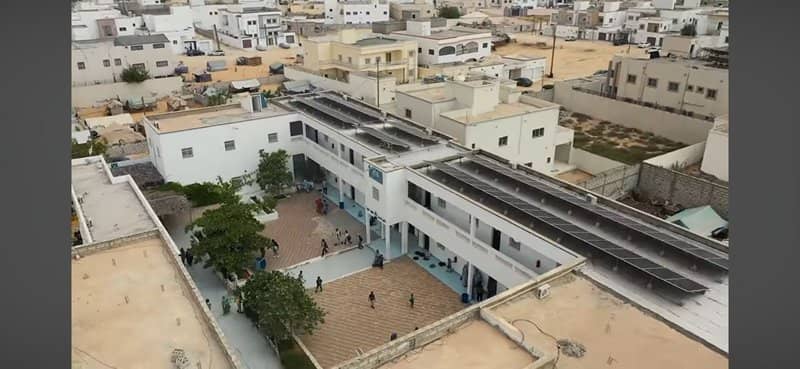
Regardless of network blackouts in the city outside, the school’s power – including lighting, IT, and educational devices – is now guaranteed.
SEEMA designed, supplied, and installed a 72 solar panels. 30 kWh of Lithium storage and an AC output power of 50 kVA.
The power installation consists of:
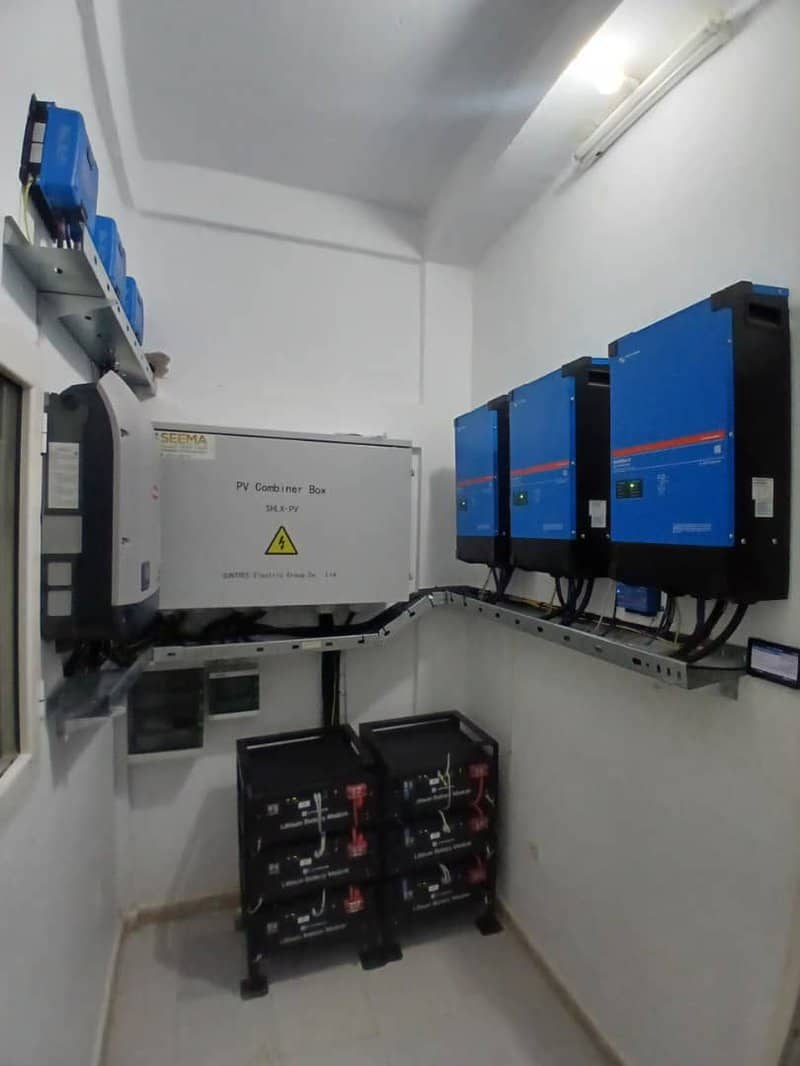
With uninterrupted power supply 24/7 the school is proud to have reached this important milestone of transitioning to clean energy. The “Green Iman” project uses the electrical grid very little and the generator has been removed.
Students are made aware of the challenges of future energy and eco-friendly practices, while some teachers integrate these themes into their teaching methods to raise awareness from an early age.

Seema Solar undertook the entire project themselves, from technical design and equipment procurement, through to the commissioning of the solar installation.
Seema will support Lycée Iman in the longer-term, offering continuous technical partnership to ensure the system’s flawless performance and reliability. Seema also takes the opportunity of this initiative to teach students and staff about renewable energy.
Moctar ETHMANE – owner at SEEMA SOLAR – says: “The main challenge was, above all, the financial aspect. In Mauritania, there are very few support mechanisms for this type of initiative, and the school had to finance the project entirely from its own funds to transition to solar energy.”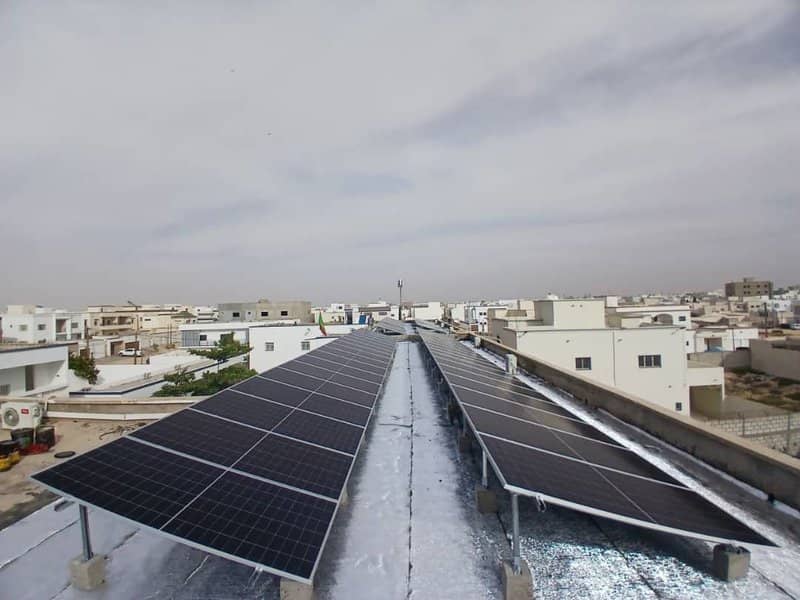
“Another major challenge was the initial condition of the electrical installation, which did not meet standards. From our very first contact with the school, this was identified as a critical issue,” he says.
The school is located at the edge of the Sahara desert – unsurprisingly intense heat is often an obstacle to work. Frequent voltage drops on the electricity grid prevented the air conditioning from functioning properly – a situation which directly affected learning and sometimes impacted on students’ health.

Moctar says that they are particularly satisfied to have ensured a stable power supply which provides students with a safer, more comfortable, and more suitable learning environment.

The project was a major investment for Lycée Iman. The funds used for the sustainable power transition were their own. In tribute to the school’s management team, Moctar says: “Most importantly, we are proud of the quality of the collaboration with the school’s management, who trusted us from the beginning and fully supported the implementation of this project.”
You can contact, connect and follow Seema Solar at their social media sites at LinkedIn and Facebook.
Let’s take a look at the school and what has been achieved:

Justin Tyers • 27 March 2026
Four Season RV with Solar Power
“ I ordered my AEV Prospector and Four Wheel Camper in December 2020, took delivery in September 2021, and began full-time overland travel in October 2022. My journey has taken me through virtually all of the 48 contiguous United States. I particularly enjoy traveling Backcountry Discovery Routes (ranging from 150 to 1,500 miles), exploring vast National and State Forests (from 100,000 to 3.5 million acres), grasslands, and other remote wild places.” This week let’s meet Chet Szymecki – who posts on well-known RV community boards as RamblinChet. Data from Chet’s meticulous research and record keeping will be useful to many leisure explorers who are interested in worry-free mobile power, without plugging in. “A key question I had was whether a properly engineered solar power system could sustain daily needs without relying on a generator, shore power, or frequent interventions. The data shows that it can – and reliably so.” On the roof of his RV he has two solar panels rated at 250W each. Chet’s travels take him through Forest and mountain – as well as the plain – so that his panels are often in partially-shaded locations. The biggest power load in his set up is a National Luna 80L refrigerator, which is always on. He also charges his laptop, phone, LED interior lights, a fan, and Bluetooth speaker, among other loads. “To my knowledge, no other full-time overland traveler has publicly documented a continuous six-month period using only solar power across such varied conditions: snow in the Northeast, heavy rain, extended overcast, broken clouds, full sun, dense tree canopy, shadowed backcountry roads, and open routes. I have tracked solar production, energy consumption, battery state-of-charge (SOC), and related metrics month by month, sharing the detailed findings. The average daily consumption over these 182 days was approximately 560 Wh (102 kWh total / 182 days = 0.560 kWh/day). My intent is to provide practical, data-backed information that may assist others in designing or refining their own systems.” Chet’s solar power is harvested by a SmartSolar MPPT 100/30 solar charge controller for storage into 2 x LiTime 12V 100Ah Group 24 LiFePO4 batteries. He has a BlueSmart IP22 battery charger 12V-30A and an Orion XS 12/12-50A DC-DC charger – but neither device was used during this data period. The objective was to evaluate the solar system and battery bank capacity to support off-grid travel demands. After exercising the system for six months, covering 4,752 miles of overland trails, and with temperatures between14°F/-10°C to 88°F/31°C, there were no significant issues through fifteen states: Alabama Connecticut Florida Georgia Maine Maryland Massachusetts New Hampshire New York North Carolina Pennsylvania Tennessee Vermont Virginia West Virginia Daily consumption averages by month: 0.600 kWh/day (18 kWh / 30 days) in September 0.516 kWh/day (16 kWh / 31 days) in October 0.500 kWh/day (15 kWh / 30 days) in November 0.548 kWh/day (17 kWh / 31 days) in December 0.581 kWh/day (18 kWh / 31 days) in January 0.643 kWh/day (18 kWh / 28 days) in February “Initially, this adventure was something for me – a long-held dream to retire early, explore mountains, forests, deserts, swamps, islands, small towns and backcountry roads, and focus on improving myself physically, mentally, and spiritually. Over time it has quietly transformed. While I still deeply enjoy nature’s beauty, the journey has become more about putting others’ needs ahead of my own. We live in challenging times, and I feel truly blessed that I’m occasionally able to help others in small but meaningful ways – often simply by listening without judgement, truly seeing them for who they are, and offering a kind word or the promise of praying the rosary for them that night and just being a friend.” The histogram of maximum daily SOC over the most recent 28 days (February) shows values ranging from 81% to 100%, with 24 days between 90% and 100%. Full charge (100% SOC) was often reached confirming adequate solar capacity under February conditions – one of the lower-yield periods due to shorter days, sun angles, and frequently overcast. Performance should improve in March and April as insolation increases. The system met and exceeded the design objective of providing at least seven days of autonomy using solar alone, sustaining operation for the full 182 days. The best parts of this life are the quiet mornings in wild places, the ever-changing landscapes, and these unexpected human connections. The hardest parts are the loneliness that sometimes appears, and not being able to share these adventures with a wife. With long hair, a beard, and so much time spent alone in the wilderness, the odds aren’t great. If it’s meant to be, it will happen. My travel rhythm has also evolved. In the beginning I was constantly on the move, sleeping somewhere new almost every night. I’ve exercised my self-discipline and I’ve learned to slow down, stay longer in places, and truly savour the local history, culture, and cuisine. For the past month I’ve been exploring the Everglades and islands of the Florida Keys, often staying two or three days on one island before moving just a short distance to the next beach or trail. The histogram of minimum daily SOC for the same period ranges from 70% to 92%, with 18 days between 80% and 90%. Minimums typically occurred just before sunrise. The design target was to keep SOC above 25% under normal use; the lowest recorded value of 70% (with all others higher) indicates strong margin and reliable performance. The screenshot below, captured from the Victron Energy solar charge controller, shows the energy harvest over the past 28 days. The white portion of each column represents the percentage of time spent in Bulk charge mode, while light blue indicates the Absorption phase and medium blue denotes the Float phase. The data shows that the system reached the Float phase most days. The batteries were fully charged 80% of the time. RamblinChet’s electrics are mounted into a Zarges K470 aluminium case. Chet spent a great deal of time researching the power components he would use during his extended journey; and having made those choices, drew up and then rejected twenty or so design layouts until arriving at the optimum installation arrangement in his $900 case. Information displays and power switches are presented on the front panel following the same logic as a flight cockpit – six pack of primary gauges in the center and controls grouped by function, importance, and frequency of use. The top surface of the box houses a Wallas Nordic DT diesel stove whose exhaust is routed through the inside of the box in such a way that the electronic devices were not affected by physical contact, and remain well within their operating temperature range. That’s a pretty tall order – a number of his contacts, who know what they’re talking about, advised against it. But Chet approached this design as an engineering proof of concept, and experience has shown that the arrangement is successful. Working with detailed product information from the manuals and data sheets helped Chet understand the opportunities and limitations which would affect his design. Wiring gauges were calculated with the help of Wiring Unlimited ; all fuses are premium quality – the number one priority of the whole installation being fire safety, urged on by the unfortunate experience of others. Looking back on his working life experiences, Chet says: “After a long career working primarily in mechanical and electrical systems, I spent most of my professional life as a Technical Project Manager with a focus on robotics and automation. I had the privilege of working at companies such as Lord Corporation, Siemens VDO, Swisslog, and NASA Langley Research Center on projects including the Mars Science Laboratory Entry, Descent & Landing Instrument (MEDLI), the Program to Advance Inflatable-Decelerators for Atmospheric Entry (PAIDAE), and the Autonomous Landing Hazard Avoidance Technology (ALHAT).” The first image Chet sent us to illustrate his journey was of a leaf, covered with dew. We wondered why. It’s fitting to close this story with Chet’s words, which resonate with us all. “ I got up early and went for a walk in the forest by myself. My mind was pretty heavy with thoughts about some of the men I served with – their faces kept coming back to me, and how their deaths never felt like heroic sacrifice or anything glorious. To me they just felt futile, wasteful, and tragic. I spent a good while walking and praying for their souls. Then I almost stepped right on this one autumn leaf lying flat on the ground. I stopped, knelt down, and just looked at it for a minute. The raindrops on its veins were catching the light like small rosary beads. It hit me how beautiful it was in its own quiet way – its green days were over, it had done its job feeding the tree and dancing in the wind, and now it was just surrendering, giving itself back to the soil for whatever comes next. For some reason it felt like God was showing me something right there – like there’s this careful, holy beauty even in endings that we usually just walk right past without noticing. I pulled out my phone, snapped one picture, and wrote those words for the picture on the spot. My eyes became heavy while composing my thoughts. When I got back in the truck and started driving along the trail (NEBDR), I rolled the windows down and played Albinoni’s Adagio in G Minor softly. That song always takes me straight back to the end of an old movie Gallipoli from the early 80s – young Mel Gibson is in it. If you ever watch it, you’ll see what I mean. Those young guys running into machine guns – it just breaks your heart because it was all so pointless. That little leaf became a kind of symbol for me of all those lives that end too soon, and how easy it is to miss the sacredness in them unless you slow down and look closer .” You can follow Chet, hear more about his system, follow his journey. and ask questions here on the Victron Community .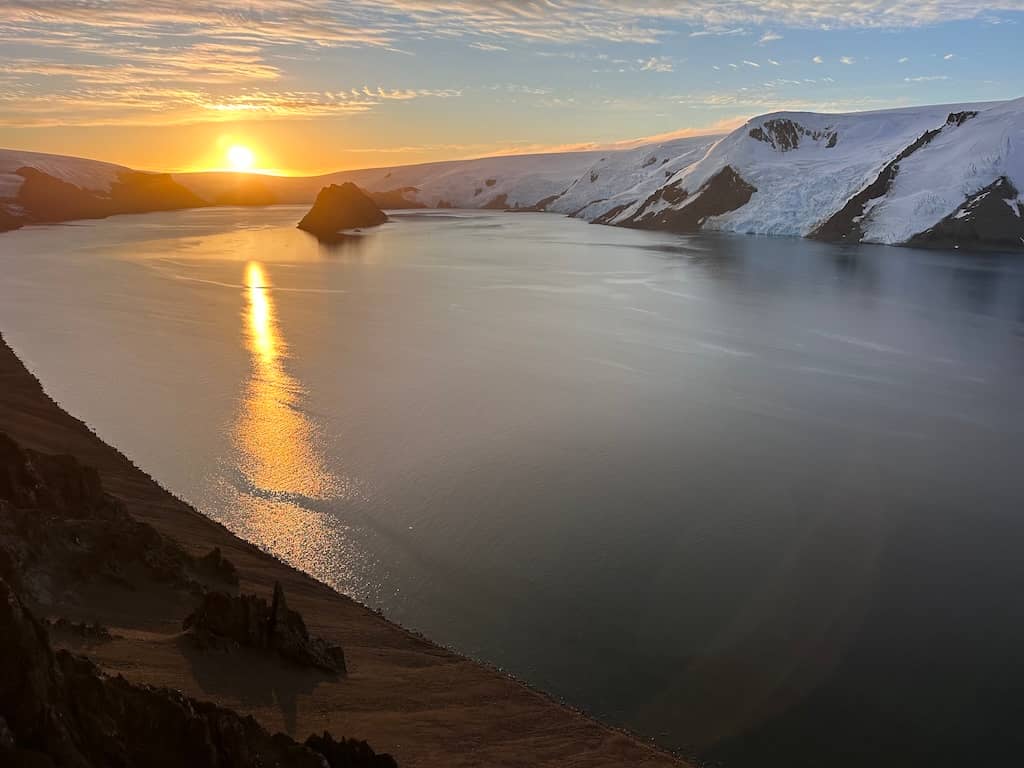
Justin Tyers • 20 March 2026
New Dawn for Antarctic Research station
Most Antarctic research stations rely heavily on diesel generators. The fuel has to be transported over vast distances at high cost and with environmental risks – a major logistical and technical challenge. The southern hemisphere Henryk Arctowski Polish Antarctic Station – which has been operational since 1977 – is undergoing a major transformation with the construction of a new research facility offering accommodation, laboratories, and recreational facilities, and supported by a huge investment in sustainable energy. The cutting edge design of the 1500m2 building secures it against the elements typically found in one of the harshest environments on Earth. Salt laden winds above 100mph are common, together with drifting snow – the aerodynamic design of this building experiences downward thrust owing to the propeller-shape of its abrasion resistant, three-arm, elevated plan – all of which is raised 3 metres off the ground. It also benefits from around 350kWp of solar array, together with 1MWh energy storage. Located on the shores of King George Island, at the northern tip of Antarctica, between 15 and 60 scientists from a wide range of disciplines: oceanography, glaciology, meteorology, seismology, geology, and ecology, amongst others, will be able to gather data and work for months at a time in secure and pleasant building which has clean and reliable power when the building becomes fully operational later this year. The original station – now almost fifty years old – was built just a few metres from the sea, but rising sea levels mean it is now just one metre from the sea and its decay is accelerating. The new building has been built 100 metres from the sea. Harvested energy is stored in 72 x 15kWh lithium batteries with a total capacity of > 1 Megawatt hours. The heart of the power system – which was built outside Warsaw, Poland by the team at Microgeneracja – was installed into a climate controlled shipping container for ease of transportation. This allows some simplification of the workload on location in Antarctica – but because of the location, some constraints applied. The maximum lift from ship to shore, for example, is 10 tons so the batteries had to be packed separately and installed in situ. It takes two weeks to unload the supply ship upon arrival. Carrying supplies for this huge and remote construction project the ship is well-laden – and not everything can be unloaded exactly when it’s needed. Working as part of the wider construction team, sharing challenges, Microenercja have installed 400 solar panels – often working during a gale – onto the roofs of sundry storage buildings. Marek Klonowski of Microgeneracja says the greatest challenge is that when you get to Antarctica there are no shops – in order to achieve success you have to arrive with everything you are likely to need. Energy from the solar panels is harvested by a number of Fronius Symo 20kW Solar Inverters. Two SmartSolar MPPT RS solar charge controllers are also installed – these powerful devices are designed for systems with large series connected PV arrays charging 48 V DC battery banks. 12 x Quattro 15kVA Inverter/Chargers provide the facility with AC power which is largely used for heating and in the kitchens. The Quattros are capable of providing a 2,400A charge current to the battery bank from generators, and from surplus energy harvested by the Fronius Symo Solar Inverters which are controlled by the Quattro’s frequency shifting ability. Automatic generator switching ensures that they will only run when necessary, and then at maximum efficiency. The station currently uses two legacy Volvo generators of 180kVA and 160kVA, but these will soon be replaced with two synchronised 250kVA generators. During the winter months when sunlight is weak and of short duration, it will still be necessary to produce energy from the generators. Power transfer at this scale needs robust and heat efficient bus bars. Sustainable energy systems not only reduce emissions but they will improve reliability, eliminating downtime; reducing the need for generator maintenance and the presence of engineers and – most significantly – reducing the need for fuel deliveries and therefore reduce the risk of contamination – one of the greatest operational risks in polar regions. Hydroelectric and wind power generation are under consideration for the future. The Arctowski Station – which is managed by the Institute of Biochemistry and Biophysics of the Polish Academy of Sciences has residents all year-round. Groups of Polish and International scientists conduct research on location in the Antarctic, receiving technical and logistical support to conduct their work. The new facility has been designed to comply with the Antarctic Treaty which places strict obligations on environmental protection. The station’s modernisation which is being built at a cost of over $46mUS, aims to ensure that Poland continues to meet these international commitments while maintaining a strong scientific presence on the continent. The roofs of ancillary storage sheds have been clad in solar panels which offer 350kWp. The new Arctowski Station is a glimpse into the future of polar research infrastructure—combining advanced science, sustainable design, and innovative energy systems. As climate change accelerates, the importance of Antarctic research grows. Arctowski is one of ten research stations in the region providing observation outposts which will help scientists understand processes that affect weather patterns, sea levels, and therefore worldwide ecosystems.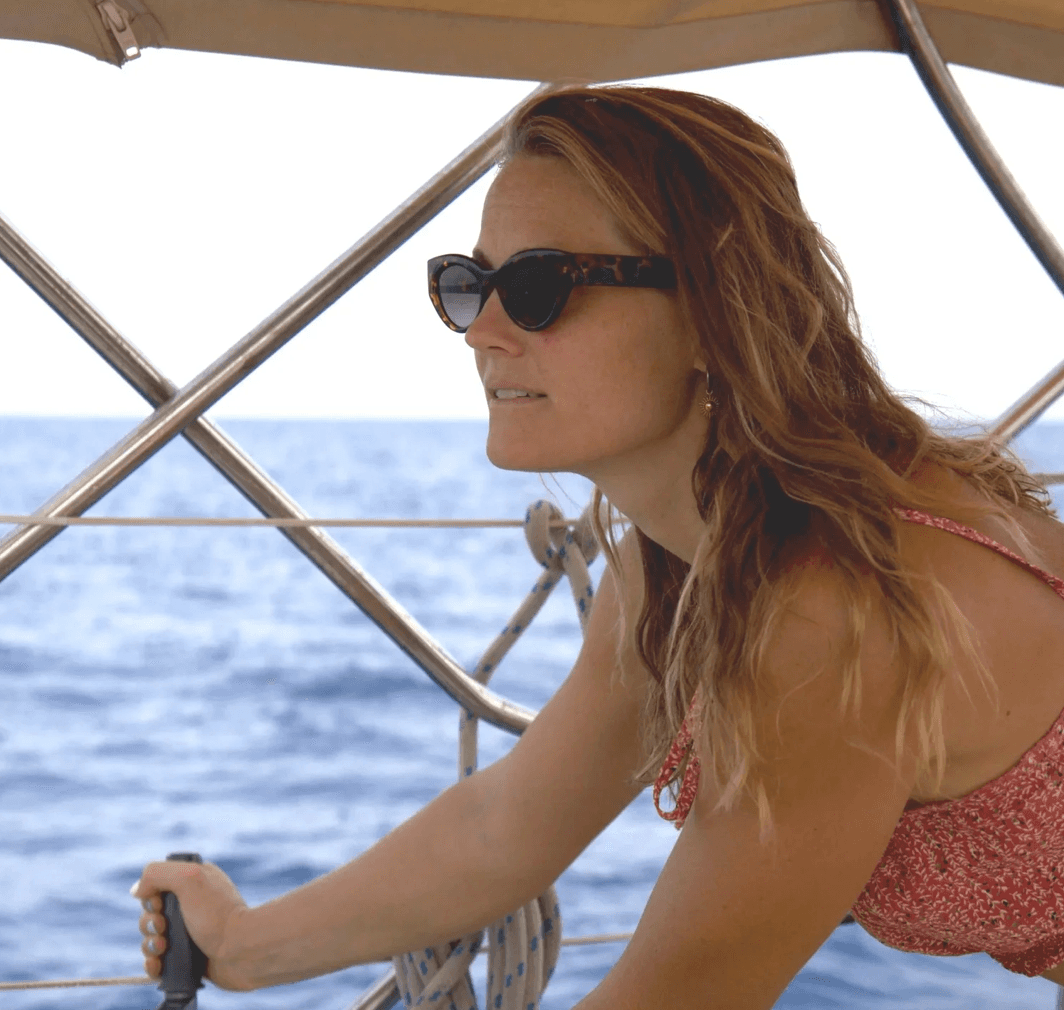
Justin Tyers • 13 March 2026
Thousands watching solo sailor
If you don’t easily get sea sick why not join Norwegian Helga Marie Løvenskiold Kveseth – who goes by the name Mara – on her LIVEstream as she crosses the Atlantic? Already having 25,000 miles under her keel, Mara is sailing her Saltram Saga 36ft double-ender called Showgirl to St Martin in the Caribbean in order to qualify for the Golden Globe Race 2026. The Golden Globe is an epic yacht race – more than twenty participants are expected to cross the start line later this year on September 6th to sail singlehanded around the world using only the equipment which was available to circumnavigators sixty years ago. Using a sextant to make celestial observations, and plotting their position on paper charts, skippers spend nine months at sea crossing world’s remotest oceans in their grandest moods. It’s not for the feint hearted. For her qualifying passage Mara’s boat is equipped with the latest technology in order to bring us closer to the experience of sailing alone. Her 24 hour live stream via Starlink router, together with other domestic conveniences, uses a lot of power, The original electrical system onboard was unable to support the planned loads so she enlisted the help of Sea & Land Yacht Works to do a power audit of all her domestic and navigation devices and provide a system which could support the ambition. Sea & Land Yacht Works is a marine service provider based in Rhode Island U.S. specializing in marine electronics, electrical and marine systems. Interestingly, they offer their technical service all round the world by contracting qualified installers to build systems from their drawings, using specifications which meet ABYC certification standards. Company founder Michael Garretson is an AYBC Master Technician and also a Mechanical Engineer. Working from his drawings installer Electrical Marine Services Gibralter built Showgirl’s power system in Gibralter just before Mara set off on her solo transatlantic passage. Power Assumptions The power audit for Showgirl’s electronic devices suggested a daily power consumption of 492Ah Equipment Load Fridge 60 NAV Instrument 45 Starlink 240 Rasberry pi 28 Camera 47 dgi 16.3 random cameras 7.5 VHF 12 Lighting 15 Phone charging 2 handheld 0 Watermaker 19 Total: 491.8 In order to provide that power three power generation sources were installed: Showgirl’s four solar panels of 100Wp each would typically provide 116Ah per day . The solar harvest is controlled by two MPPT solar charge controllers of 100/30 and 75/10 to charge a 12V lithium battery bank of 960Ah. As the vessel sails a Watt&Sea Hydrogenerator 600 produces power. Assuming an average speed of 4.5knts, that model will produce 157Ah per day There’s a 275A alternator on board controlled by Arco Zeus 275L alternator regulator to maximise the power harvest. Running the engine at 1500rpm for an hour is likely to produce 230Ah . Total daily production from power generation is 503Ah . Power consumption and harvest is monitored by a number of BMV battery monitor across the MPPT solar chargers, alternator output, Watt & Sea hydrogenerator output, and the lithium battery bank loads. There is an Orion DC to DC charger to manage battery charging for Showgirl’s dual battery systems – engine starting and domestic use. A MultiPlus 12/1600/70 Inverter/Charger provides AC power. A Cerbo GX communication centre harmonises all Victron and third-party devices and makes real time data monitoring and programming available from anywhere in the world via the Starlink satellite router. The same information is just a fingertip away on board via the GX Touch 50 user interface. Showgirl is a little more than halfway across the Atlantic at the time of writing. Once she arrives, Sea and Land Yacht Works plan to install more custom solar panels and additional electrical work before she recrosses the Atlantic a few months later – live streaming again – in preparation for her Golden Globe Race participation. You can ask Mara a question via the live chat function of her LIVEstream. She typically makes time to answer questions on camera after sunset each day – her time. She says she’s going to miss all the live chat on her Golden Globe Race! Let’s see how she’s getting on: If you’re already in the Caribbean on board a boat – and particularly if you want to find out more about reliable power or workshop a power problem – take a look at our recent story here.¿Necesita asesoramiento? Nuestros altamente capacitados distribuidores estarán encantados de ayudarle con cualquier pregunta, ya sea pequeña o grande.
Encuentre su distribuidor más cercano
Consulte nuestros recursos de soporte o contacte con su distribuidor original para obtener soporte específico, reparaciones o solicitudes de garantía.
Asistencia
Lea más sobre nuestra garantía estándar de 5 años, líder en el sector, y nuestro servicio de reparación global.
Garantía


©Victron Energy 2026