Dónde comprar
¿Necesita asesoramiento? Nuestros altamente capacitados distribuidores estarán encantados de ayudarle con cualquier pregunta, ya sea pequeña o grande.
Encuentre su distribuidor más cercano
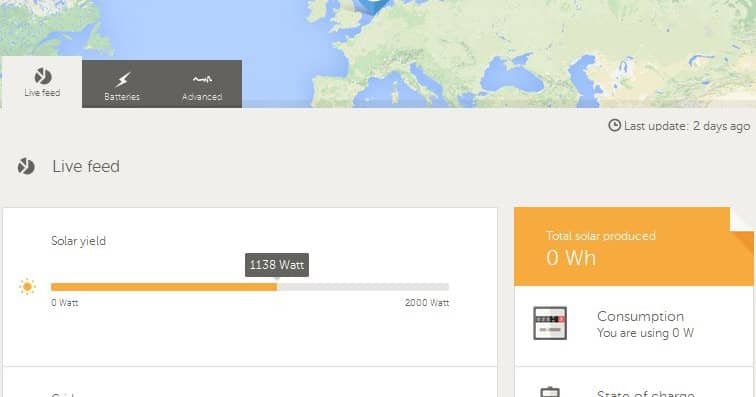
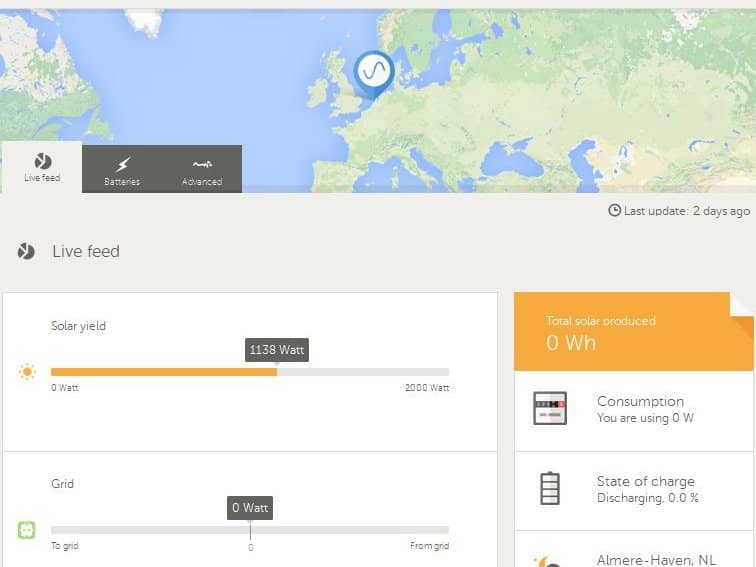
Solar chargers will normally reduce their power when the batteries become full. Otherwise they would overcharge the batteries. Solar power is obviously wasted when reducing the output power. For off-grid systems one could start a pump, or a heater, or do something else that uses this ‘excess’ power. And in on-grid systems in countries with a feed-in tariff it would pay to keep converting at the Maximum Power Point, and then have the Multi feed that surplus back into the grid. And that is exactly what we call a Hub-1 system: as soon as batteries are becoming full, the solar charger will keep operating at the maximum power point and ‘push’ as much power as possible on to the DC. The Multi, in constant communication with the Solar charger, will take that excess power and feed it back into the grid.
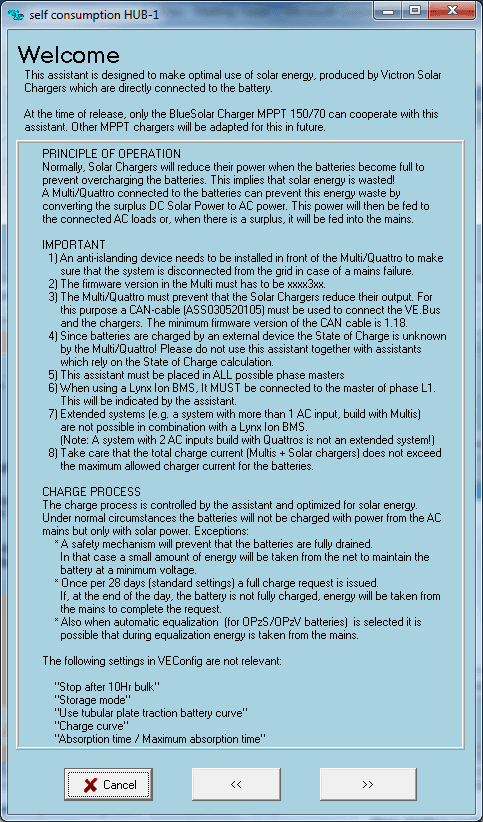
More background information about Hub-1 can be found in my previous blogpost about Hub1, and in my father’s excellent brochure about Self-consumption and Energy Storage.
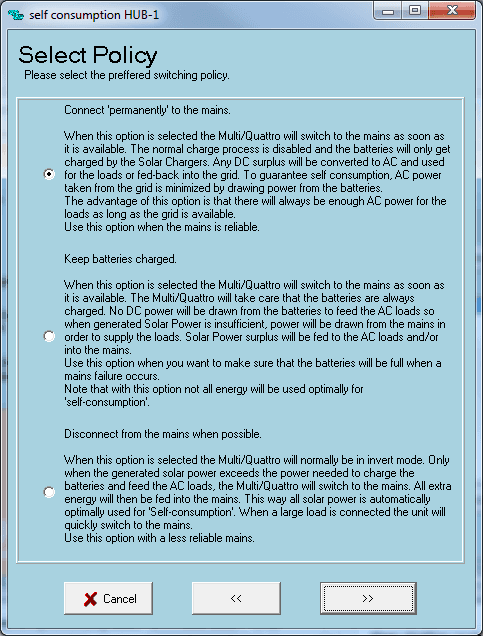
Hub-1 allows several selection policies, as explained on this page of the Assistant:
I am sure there are many more questions, please use the comments. Early next week I’ll add a schematic that shows the system.
Have a good weekend! Matthijs
¿Necesita asesoramiento? Nuestros altamente capacitados distribuidores estarán encantados de ayudarle con cualquier pregunta, ya sea pequeña o grande.
Encuentre su distribuidor más cercano
Consulte nuestros recursos de soporte o contacte con su distribuidor original para obtener soporte específico, reparaciones o solicitudes de garantía.
Asistencia
Lea más sobre nuestra garantía estándar de 5 años, líder en el sector, y nuestro servicio de reparación global.
Garantía


©Victron Energy 2026